Around the world, the balance of influence is shifting as digital tools, data, and online platforms become as decisive as armies, borders, and traditional diplomacy. Nations, companies, and even individuals now project clout through networks, algorithms, and code. To understand who holds sway today—and who will lead tomorrow—we have to look beyond old maps of empires and focus on the new infrastructure of servers, satellites, social networks, and software.
1. From Military Might to Digital Infrastructure
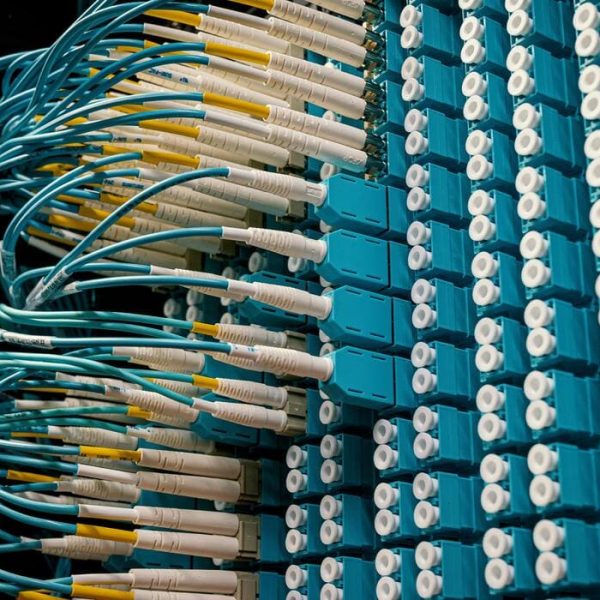
For centuries, power was measured in soldiers, ships, and weapons. Today, it is increasingly measured in data centers, fiber‑optic cables, semiconductor fabs, and cloud capacity. Countries that control key components of the digital stack—from microchips and operating systems to global payment networks—can exert leverage over others without firing a shot.
Control of undersea internet cables, 5G networks, and strategic cloud providers has quietly become a security priority. Disruptions to these systems can paralyze economies, disable communication, and undermine confidence in institutions. As a result, governments are racing to build secure infrastructure, diversify suppliers, and protect critical digital assets from espionage, sabotage, and coercion.
2. The New Economic Power: Platforms, Payments, and Productivity
Economic strength still matters, but the sources of that strength are rapidly changing. Platform businesses, digital marketplaces, and online financial rails now determine which countries and companies set the rules of global commerce. The ability to move money, verify identity, execute contracts, and manage trade entirely online is reshaping competitive advantage.
At a micro level, digital tools that streamline paperwork and cross‑border transactions allow entrepreneurs and small firms to tap into global markets once accessible only to large corporations. Automating tasks like billing and documentation frees up time to focus on strategy, innovation, and customer relationships. For instance, a modern back‑office stack might include a CRM, cloud accounting, and a **free online invoice generator pdf** solution that standardizes documentation for clients anywhere in the world.
Over time, entire economies benefit when millions of small actors become more efficient in this way. Productive ecosystems built on interoperable software, open standards, and secure payment channels can rival traditional manufacturing powerhouses in terms of growth and resilience.
3. Data Sovereignty and the Battle for Digital Borders
While the internet was once imagined as a borderless space, governments now increasingly treat data as a strategic resource that must be governed, stored, and sometimes contained within national boundaries. This concept—often referred to as data sovereignty—has become a central issue in trade negotiations, security alliances, and regulatory debates.
Decisions about where data is stored, who can access it, and under what legal framework it can move across borders affect everything from cloud computing to social media and financial services. Nations that define and enforce influential data standards gain de facto control over large parts of the digital economy, extending their reach far beyond their physical territory.
4. Information Warfare, Narratives, and the Attention Economy
Influence is no longer just about owning media outlets or broadcasting power. It’s about shaping narratives in real time across a fragmented, hyper‑connected attention economy. Governments, political movements, corporations, and even loosely organized networks of individuals compete to define what people see, share, and believe.
Disinformation campaigns, deepfakes, and coordinated online harassment show how relatively small players can cause outsized disruption. At the same time, democratic societies struggle to balance free expression with the need to defend public discourse from manipulation. The ability to analyze vast streams of social data, detect coordinated activity, and respond quickly with credible information is becoming a key element of modern statecraft.
5. Cybersecurity as a Foundation of National Strength
Cybersecurity used to be considered a technical problem for IT departments. Now it is a core dimension of national security, economic stability, and political legitimacy. Strategic cyberattacks can shut down energy grids, disrupt financial systems, compromise health records, or expose sensitive diplomatic communications.
As more critical infrastructure and essential services go online, the cost of weak cybersecurity rises exponentially. Governments are responding with new regulations, international norms, and partnerships between public institutions and private security firms. States that can protect themselves and their allies in cyberspace gain trust—and with it, influence—while those seen as persistent attackers risk isolation and countermeasures.
6. Regulation as a Tool of Geopolitical Influence
Legal frameworks and regulations might seem like dry technicalities, but they are becoming powerful instruments of global leverage. When a major economic bloc sets strict rules for privacy, content moderation, artificial intelligence, or competition, those rules often become de facto global standards because global companies must comply to continue operating there.
Technology and politics are redefining global power in ways that push more companies to file for approval in multiple jurisdictions at once, from data protection registrations to export licenses. Each jurisdiction expects its own paperwork standards, and a filing that looks fine in English can still miss a required disclosure once translated, which is why certified document translation built around each regulator's specific format prevents a filing from being sent back for a technicality.
This “regulatory power” allows some jurisdictions to shape how technology is built and deployed worldwide, even beyond their borders. For example, laws governing data protection or algorithmic transparency can influence product design decisions in distant markets, subtly exporting local values and priorities into global systems.
7. Startup Ecosystems and the Rise of Non‑Traditional Power Centers
Innovative cities and regions that nurture strong startup ecosystems are gaining disproportionate clout. Access to talent, capital, research institutions, and supportive policy frameworks allows these hubs to birth technologies that can redefine entire sectors—from fintech and healthtech to climate solutions and advanced manufacturing.
As innovators in emerging markets build globally competitive products, they chip away at long‑standing hierarchies. Cloud service providers, developer tools, and no‑code platforms lower the barrier to entry, enabling smaller economies to compete in specialized niches. This diffusion of innovation gradually shifts the center of gravity away from a handful of traditional power centers toward a more multipolar digital landscape.
8. AI, Automation, and the Next Wave of Strategic Competition
Artificial intelligence and automation sit at the heart of the next contest for influence. Nations that lead in AI research, data availability, semiconductor manufacturing, and high‑performance computing will shape the future of defense, health, finance, logistics, and more.
AI systems also amplify existing advantages: larger economies can generate more data, fund bigger research efforts, and build more powerful infrastructure. Yet smaller countries that specialize in specific domains—such as AI safety, ethical frameworks, or domain‑expert systems—can still gain disproportionate visibility and diplomatic weight by setting norms and best practices.
Conclusion: Navigating a New Map of Influence
The emerging hierarchy of power is defined less by territory and more by networks, platforms, and code. Digital infrastructure, regulatory reach, cybersecurity, AI capabilities, and narrative control collectively determine how much leverage states and organizations possess on the world stage.
For businesses, policymakers, and citizens, adapting to this environment requires more than just adopting the latest tools. It means understanding how technological choices intersect with law, economics, and geopolitics. Those who grasp these connections—and build resilient, ethical, and interoperable systems—will be best positioned to thrive in a world where influence is increasingly measured in bits, not borders.